This article is part of Food Tank’s primer series, “Food Tank Explains.” Each installment unpacks the ideas, innovations, and challenges shaping today’s food and agriculture systems, offering clear insights into complex topics. To explore more articles in the series, click here.
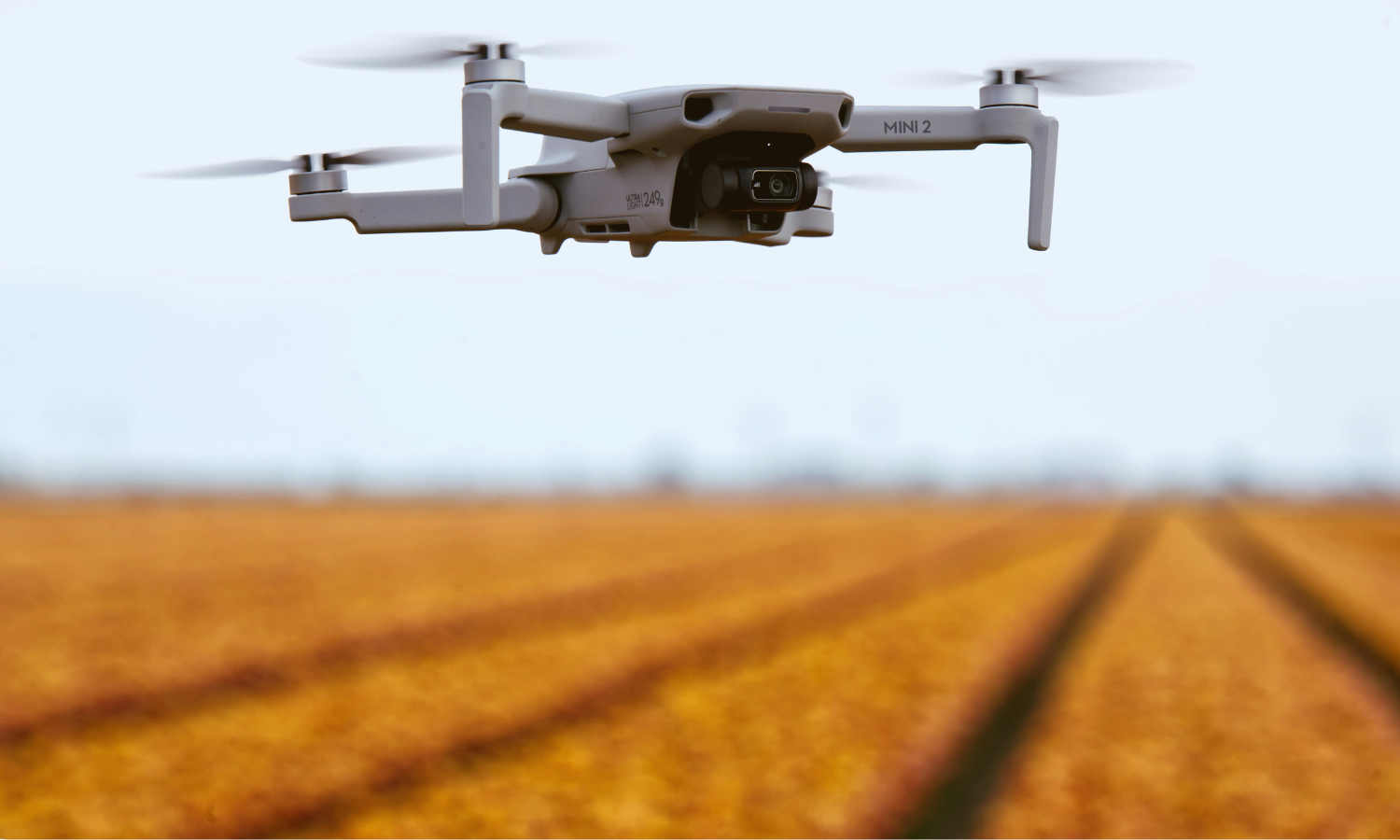
Precision agriculture is a data-driven farm management approach that uses technology like GPS, sensors, drones, and Artificial Intelligence to collect and analyze detailed information on crops, soil, and environmental conditions in real time.
These tools can help farmers account for variability within fields, track and analyze soil quality, crop health, pest infestations, and temperature levels, and apply inputs like water, fertilizers, and pesticides with greater precision. The aim is to improve resource efficiency, productivity, and profitability while reducing waste and optimizing decision-making.
Precision agriculture tools can be used separately or combined into integrated data-driven platforms. GPS-guided tractor systems seek to improve field accuracy by minimizing overlaps or gaps in herbicide or fertilizer application. And yield monitoring technologies collect and map GPS and farm equipment data to guide decisions about when to sow, fertilize, or harvest.
Drones and remote sensors capture high-resolution imagery to assess crop health and detect variability. Variable rate technology uses this data to adjust the application of inputs like fertilizers and pesticides in real time.
As investment accelerates, the digital farming sector has grown into a multi-billion-dollar industry, valued between US$10 billion and US$30 billion in 2025 with projections of doubling in the next decade.
Precision agriculture shows potential by enabling farmers to make timely, data-driven decisions tailored to conditions on their land. Precision tools can improve resource efficiency, support more precise decision-making, and facilitate adaptability, which researchers associate with lower fuel, labor, and maintenance costs. These capabilities may contribute to improved outcomes for soils, crops, livestock, and overall farm performance.
But many farmers cannot access precision agriculture technologies because high costs, infrastructure demands, and technical requirements create significant barriers. Farmers must navigate substantial upfront investments, limited training opportunities, and a reliance on consistent internet and electricity, which makes adoption especially difficult for small-scale producers and those in lower-income regions.
Most smallholder farms, which account for about 85 percent of farms globally, continue to operate without these tools, while adoption remains concentrated among larger, capital-intensive operations. Authors of a recent HEAL report warn that these disparities may further exacerbate deeply rooted racial and economic inequities in agriculture.
A report from the International Panel of Experts on Sustainable Food Systems (IPES) links this dynamic to a broader shift toward farm consolidation, as alliances between major agribusiness and technology firms expand control over data, inputs, and decision-making across the food system. “They are shaping what technologies are developed, how food production decisions are made, and what the future of farming looks like,” IPES says.
In parallel, research evaluating environmental outcomes has found limited and inconsistent evidence that precision agriculture reduces inputs or emissions in practice. And there questions about whether the approach could deliver meaningful sustainability gains if it were more equitably accessible.
The wide-spread adoption of precision agriculture is a conflation between efficiency and sustainability, Celize Christy, Member Organizing Lead at HEAL Food Alliance, tells Food Tank. According to HEAL, the production and use of precision agriculture technologies relies heavily on internet-connected devices and energy-intensive operations which generate substantial global emissions.
While innovation is central to improving agricultural efficiency and sustainability, its benefits depend on how it is developed, governed, and deployed, experts caution.
IPES calls for “reclaiming innovation for people and planet,” emphasizing the need to strengthen public oversight, limit the concentration of power among major technology and agribusiness firms, and reshape dominant narratives about what constitutes innovation. HEAL Food Alliance suggests focusing on regenerative practices that regenerate soil, strengthen rural economies, and prioritize equity.
“Climate solutions should serve communities,” Christy tells Food Tank. “Not corporations.”
Articles like the one you just read are made possible through the generosity of Food Tank members. Can we please count on you to be part of our growing movement? Become a member today by clicking here.
Photo courtesy of Job Vermeulen, Unsplash