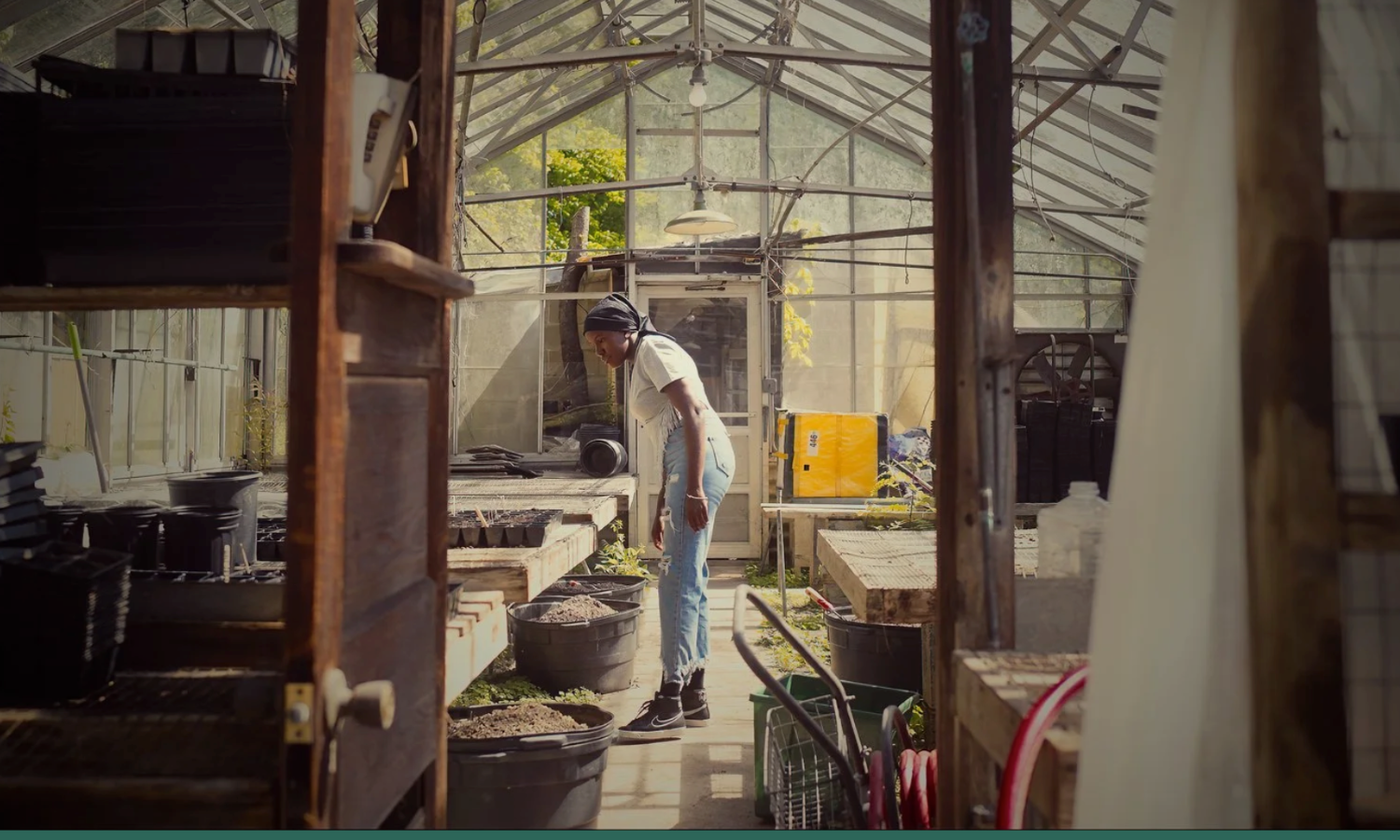
On 128 acres in Pennsylvania, Christa Barfield is building something bigger than a farm. She founded FarmerJawn, now the largest Black-owned farm in the state, with a vision of agriculture rooted in equity, access, and care for the land. Today, the farm is a model for regenerative organic food production that is by and for underserved communities.
Barfield returns to her central philosophy often: “Agriculture is the culture.” This means that farming is not separate from daily life. From food to clothing to building materials, agriculture underpins the systems people rely on, even if they rarely see it, she says: “Everything you touch on a daily basis…that is thanks to a farmer somewhere sometime.”
Barfield did not set out to become a farmer. But after spending her early career in a high-volume medical office in Philadelphia, she took a trip to the island of Martinique. There, she encountered a community-based model of food production, where people sourced food directly and regularly from those growing it. The experience shifted her perspective on what food systems could look like.
Barfield describes drinking tea picked fresh from her hosts’ backyard garden and joining community members distributing boxes of fresh fruits, vegetables, and herbs for their neighbors. These were direct, human-to-human transactions paid in cash—something she rarely saw at home.
“The real magic of that moment was that I then was able to see these multicultural people walking in, and they were coming in and taking these boxes,” says Barfield. She remembers thinking, “What is this that I’m seeing?”
She was hooked, deciding shortly after that she would become a farmer. “I was going to start a tea company, and I was going to start a farm,” Barfield says. “And that’s exactly what we did.”
But bringing FarmerJawn to life required a period of intense work and instability. Barfield says she would drive for ride-share companies from 5 to 9 a.m., manage her business all day, then make grocery deliveries from 5 to 9 p.m. to make ends meet. She experienced housing insecurity for years.
“I built it brick by brick,” says Barfield.
Now FarmerJawn is expanding its impact, with the farm now eligible for regenerative organic certification. Barfield is prioritizing stable, well-paying jobs—an approach she sees as essential to building a more just food system.
“The only way that businesses can actually grow the right way is if you’re paying and taking care of your team,” says Barfield.
Her work has earned national recognition, including a James Beard Award in 2024 and a role in state-level agricultural leadership. But Barfield says visibility does not shield her from the challenges facing Black farmers: “Just a few months after winning that James Beard award, there was an eight-foot swastika painted on my barn. It reminded me and my team that our safety was in question.”
For Barfield, these experiences reinforce the urgency of her work. She sees agriculture as a critical front line in addressing interconnected crises, from climate change to public health.
“What I’m getting to do is really just be used as a tool to tell the story that the Earth can’t,” she says. “That it’s literally dying right before our eyes.”
Barfield believes, however, that agricultural systems can reconnect people to land, food, and each other. She believes that transforming agriculture can help transform broader systems of health and equity.
“When I think about, is it worth it?” Barfield says. “Honestly, the only answer, it is.”
Watch Barfield’s story below and find others from our farmer storytelling events on Food Tank’s YouTube channel.
This article is part of Food Tank’s ongoing Farmer Friday series, produced in partnership with Niman Ranch, a champion for independent U.S. family farmers. The series highlights the stories of farmers working toward a more sustainable, equitable food system. Niman Ranch partners with over 500 small-scale U.S. family farmers and is committed to preserving rural agricultural communities and their way of life.
Photo courtesy of FarmerJawn