Each week, Food Tank is rounding up a few news stories that inspire excitement, infuriation, or curiosity.
Investment in Africa’s Agrifood Systems Is Growing—But Not Enough
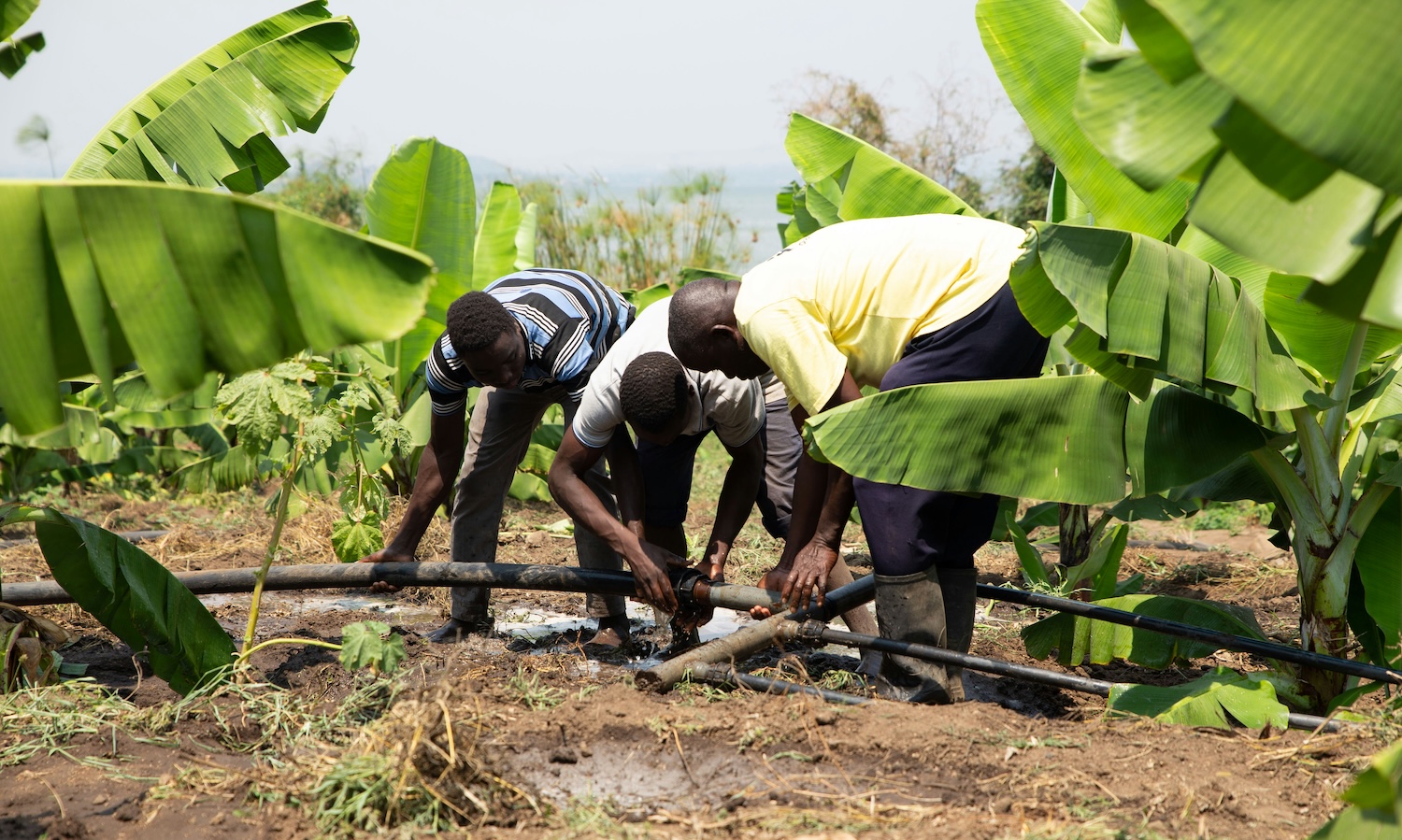
A new joint report by the U.N. Food and Agriculture Organization, the U.N. Economic Commission for Africa, the World Food Programme, and the African Union Commission finds that since 2018, the African continent has seen a general upward trend in government spending on agriculture, forestry, and fishing. In 2022, public expenditure in these sectors amounted to US$16 billion, up from US$12.6 billion in 2020 and US$14.6 billion in 2021.
While encouraging, the investment is still not enough to meet targets for ending hunger and transforming food and agriculture systems in a region where hunger has increased for eight consecutive years.
Private sector funding in the form of bank credit and foreign direct investment is particularly low and far below potential, the authors state. The perceived high risk of investing in food and agriculture markets remains a key barrier to financing solutions that can boost food and nutrition security for communities.
That’s why the report urgently calls for public-private collaboration that will de-risk investments. Policy reforms that are inclusive of women and youth are needed as well. The report also identifies climate finance—which rose nearly 50 percent in two years—as an untapped opportunity if decisionmakers can align this funding with food systems transformation that builds resilience.
COP31 Presidency, IEA Team Up to Push Clean Energy
The COP31 Presidency recently announced a partnership with the International Energy Agency (IEA) to speed up the transition to clean energy. This comes during what IEA’s Executive Director Fatih Birol calls “the biggest energy crisis in history”
Murat Kurum, Turkey’s Minister of Environment, says that it will take collaboration to “transform the crisis into an opportunity.”
While details of the partnership are still limited, one of the most important pillars of this transition will focus on clean cooking, helping the roughly 2.3 billion people reliant on polluting fuels like charcoal, firewood, and waste switch to cleaner cooking solutions. This move can not only reduce emissions but also lower the associated negative health impacts.
The Environment Minister also shared that the IEA will conduct special research on the impact of recycling, which will inform the COP31 Presidency’s agenda on cutting emissions from waste—a top priority for Turkey.
New South Wales Prepares for Food Waste Prevention Laws
Beginning July 1, sites in New South Wales that generate 3,960 liters of waste a week will be required to separate food waste from their general waste. This will impact larger operations including hotels, food courts, and other high-volume venues.
By July 2028, the rules will apply to sites that produce at least 1,980 liters of waste per week. By 2030, it will apply to those generating at least 720 liters.
Currently, households spend roughly AU$2,000 every year on food that goes uneaten. And by 2030, the government states that the country’s landfills will not be able to accept additional waste.
The New South Wales Environment Protection Authority is offering programs and grants that will help businesses comply with the new laws.
While their timelines vary, Victoria, the Australian Capital Territory, and Queensland are also moving toward circular economy frameworks that will prioritize diverting organic waste from landfills.
Agricultural Cooperatives Offer Resilience and Hope
A new policy paper from the Co-operative Party finds that agricultural cooperatives could “unleash growth” and boost food security in the United Kingdom.
At a time when the conflict is driving fuel and fertilizer prices higher, co-ops offer stability. By allowing farmers to pool resources, and share risks, and invest collectively, this model can improve resilience in the face of volatile input markets.
Paul Gerrard, Director of public affairs at the Co-operative Group, says that a co-op “naturally lends itself to sharing costs and spreading risk” while making “the day-to-day fundamentals of farming more efficient.”
There are around 500 agricultural co-ops in the UK and around half of UK farmers are estimated to be members of a co-op of some kind. But the paper says there is “significant room for expansion.” A new Farming Roadmap for England, which will be published by the Department for Environment, Food and Rural Affairs (Defra). The report’s authors believe this Roadmap is an opportunity to formalize a commitment to expanding co-ops even further.
Articles like the one you just read are made possible through the generosity of Food Tank members. Can we please count on you to be part of our growing movement? Become a member today by clicking here.
Photo courtesy of Danie Kawed, Unsplash