
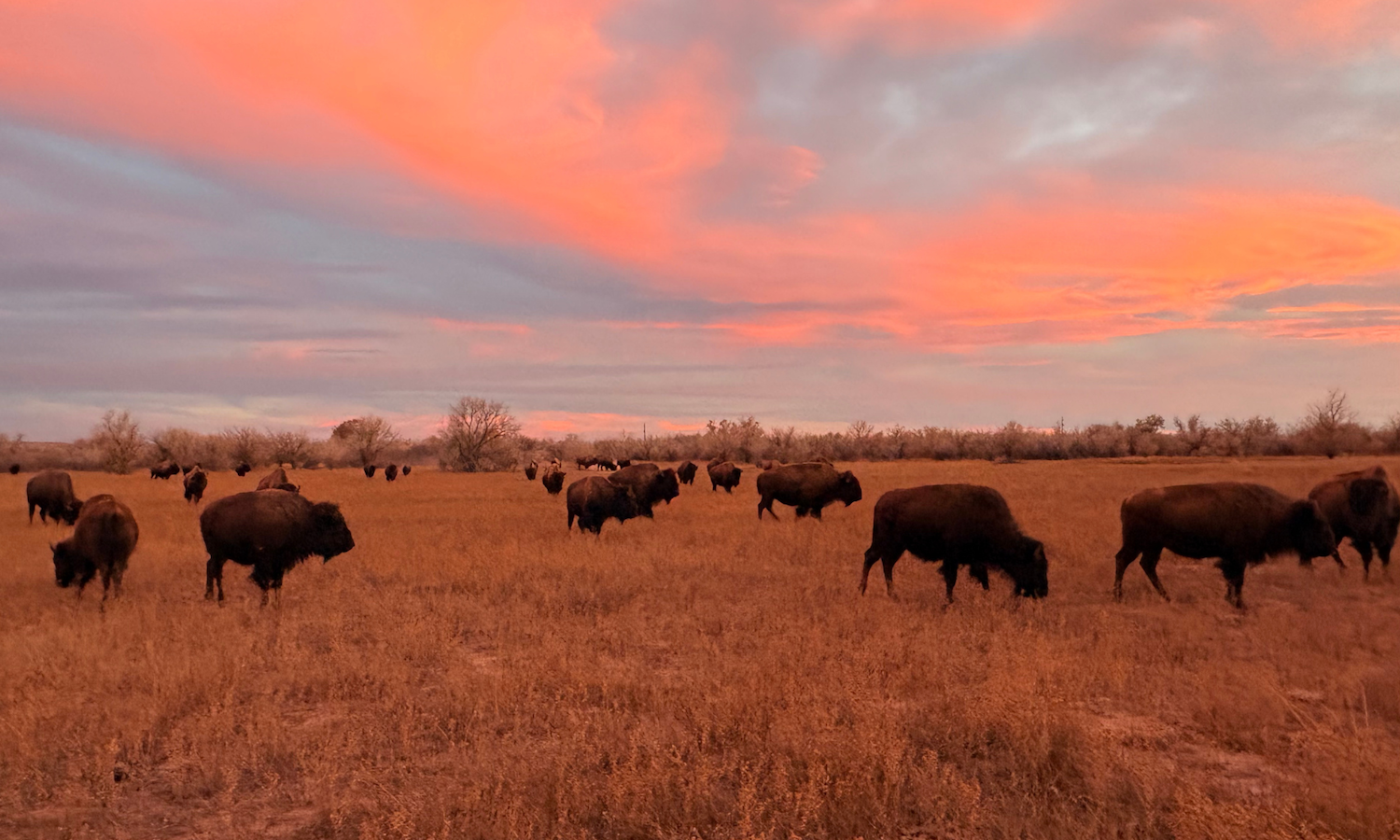
Ute Bison Meat Company was founded in response to a practical challenge: In 2015, the Ute’s bison herd in northeastern Utah had grown overpopulated, with animals moving beyond tribal lands and onto public areas. As a tribal leader, AJ Kanip was tasked with finding a solution, a role that requires navigating the complex intersection of Indigenous culture and business.
“How do I balance that out, a respectful balance between this animal that is very special towards our people, and how do I follow within the business plan for profit? How do I pursue all this with a good amount of respect?” says Kanip, now Chief Operating Officer for Ute Tribal Enterprises and Manager of Ute Bison Meat Company. “It’s not easy.”
Kanip and his team built infrastructure, navigated federal regulations, and ultimately developed a tribally owned bison business. Today, Ute Bison Meat Company generates revenue for the tribe while supporting local food access.
But Kanip says this success required going beyond a business-as-usual model. The bison are not simply livestock for the Ute; they are central to the tribe’s culture.
“Our elders tell us that the bison is not cattle or beef,” says Kanip. “They remind us that the animal comes from the open range. There’s a certain spirit that comes with them from those areas, and we need to have a traditional way of thinking when we work with them. We follow ranch procedures, but we don’t practice them entirely.”
The bison management team blends Western practices with Indigenous knowledge, prioritizing observation and relationship with the animals and land. “We look for the signs” from the animals, Kanip says, remembering one particular sign during a wildfire near the ranch.
“The amount of climate change nowadays causing destruction all over the world, I thought of the worst…that our ranch was going to burn up,” says Kanip. But “the fire didn’t even touch us, only about maybe 10 square feet, but to the west of us, it consumed 11 acres.”
For Kanip, the experience reinforces his belief that the business’s approach is aligned with the needs of not only the tribe but the animals and land. “It was then that we started to realize…what we’re doing must be approved by the bison,” he says.
Kanip emphasizes that tradition and science must work together to continue to grow this business sustainably. Bison have survived centuries of disruption, and for him, their continued presence offers lessons for the future.
“The American bison, a resilient animal, will continue to teach as long as we listen,” says Kanip.
This article is part of Food Tank’s ongoing Farmer Friday series, produced in partnership with Niman Ranch, a champion for independent U.S. family farmers. The series highlights the stories of farmers working toward a more sustainable, equitable food system. Niman Ranch partners with over 500 small-scale U.S. family farmers and is committed to preserving rural agricultural communities and their way of life. Food Tank was proud to collaborate with Niman Ranch in amplifying the voices of producers like Kanip during an evening of farmer storytelling in Park City, Utah. Watch his story and others on Food Tank’s YouTube channel.
Articles like the one you just read are made possible through the generosity of Food Tank members. Can we please count on you to be part of our growing movement? Become a member today by clicking here.