A version of this piece was featured in Food Tank’s newsletter, typically released weekly on Thursdays. To make sure it lands straight in your inbox and to be among the first to receive it, subscribe now by clicking here.
I’m in Nairobi right now conducting ground-truthing research alongside farmers, plant biologists, beekeepers, and local food system leaders in cooperation with our partners at the International Centre of Insect Physiology and Ecology (icipe).
In fact, we just announced an event with Enviu and The Rockefeller Foundation, “Celebrating our Farmers and Spotlighting Food System Visionaries.” Please share with colleagues on the ground or join us in person on Saturday April 11 if you’re local in Kenya. Tickets are free and available HERE!
One of the things I appreciate about icipe’s work is how deeply rooted it is within what they call the One Health paradigm: integrating plant, human, animal, and environmental health.
And insects sit at the intersection of these spheres, making them a vital player in solutions to climate risks, biodiversity loss, poverty, hunger, and other global challenges. Sometimes, we lump all insects together into negative categories—bugs, pests—which I think shows how tragically misunderstood some of these creatures can be!
“Food is produced in the field. You have a diversity of living beings, including insects, that are part of that production landscape,” Abdou Tenkouano, Director General of icipe, tells Food Tank.
One example: in just the commercial poultry sector, replacing half of conventional protein and energy feed sources (fishmeal, soymeal, maize) with insect-based feed could free up fish and maize as food for 4.8 million people per year; create employment opportunities for 33,000 people per year; and lift 740,000 people out of poverty in Kenya alone.
As I’m seeing first-hand here in Kenya this week, this is just one potential success story of many. Insects can be used “to recycle organic waste [into fertilizer], mitigate environmental pollution, and produce rich biomass,” among other benefits, says Chrysantus Tonga, Senior Scientist and Head of icipe’s Insects for Food, Feed, and Other Uses Program.
Today, I’m opening up my notebook to you and introducing eight of the many beneficial insects that can help shape a healthier food system.
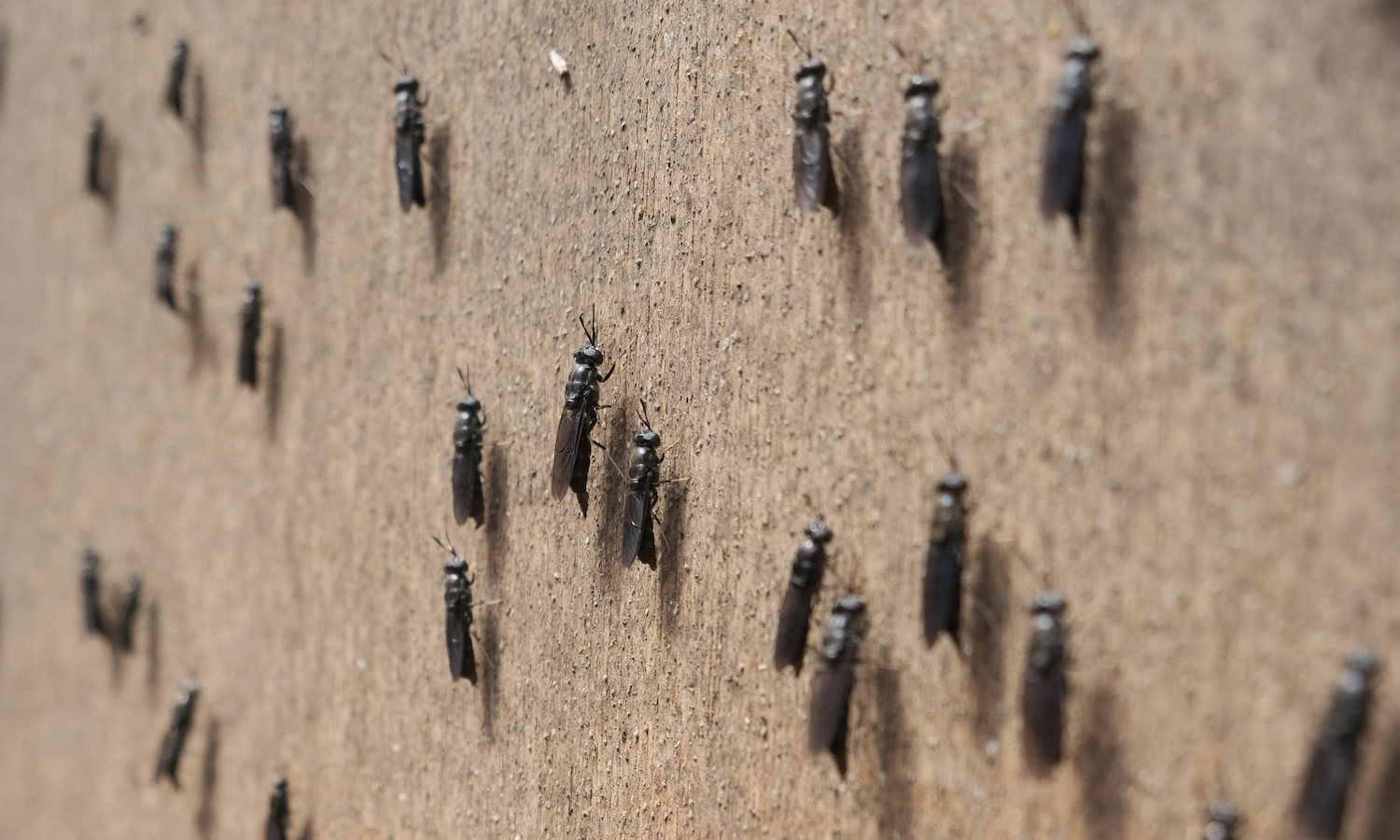
Black Soldier Flies: icipe researchers consider the black soldier fly to be one of the most versatile insects. Larvae can become high-protein feed for livestock and aquaculture. Mature flies can be used to manage organic waste. Then, an organic mixture called frass fertilizer (made of uneaten substrate, feces, and exoskeletons) can also help boost agricultural productivity.
Crickets: When it comes to insects and food systems, crickets have earned their high profile: A study of 60 edible species shows they’re rich in protein and also contain notable levels of calcium, potassium, magnesium, phosphorus, sodium, iron, zinc, manganese, and copper, as well as vitamins in the B group and vitamins A, C, D, E, and K. Researchers at icipe say crickets are “among the praised insects that are gaining recognition as human food and livestock feed with a potential of contributing to food security and reduction of malnutrition,” and they’re investigating how the insects can also contribute to ethnomedicine, livestock feed, and pest management strategies.
Dung Beetles: I know the name isn’t doing them any favors, but these insects have huge potential, icipe research concludes. Their larvae are protein-rich and safely consumed globally. When mature, these beetles recycle nutrients from organic waste and carry more nitrogen into the soil, which can help soils retain water and support healthy crops.
Locusts: This week was also Passover, so let’s talk about locusts! A small swarm can consume the same amount of food in one day as 35,000 people, per the World Bank. But for millennia in more than 65 countries, about half of known locust species have been consumed by humans or fed to animals, and icipe research shows that “their nutritional composition is comparable or superior to that of conventional meat” and may support heart health.
Mealworms: Yellow mealworms are high in protein and rich in micronutrients including zinc, iron, magnesium, calcium, and vitamin B12. Fascinatingly, mealworms can also be used to combat plastic waste! An icipe study shows that these insects can ingest polystyrene, which could offer a better alternative to current recycling practices that are expensive and can actually produce toxic byproducts.
Parasitic Wasps: Another insect whose name belies the good it can do: Yes, these wasps lay their eggs on or in the bodies of other arthropods—but icipe finds that one particular species can be used to naturally control an invasive and highly destructive caterpillar known as a tomato leafminer, which tends to quickly develop resistance to major pesticides. These wasps have also proven helpful in controlling fall armyworm, which can be “devastating” to maize crops on the African continent.
Silkmoths: Silk farming, or sericulture, offers sustainable employment and entrepreneurship opportunities for women and youth, icipe finds. And the global silk market is projected to double in value to around US$34.1 billion by 2031—making sericulture especially attractive for rural off-farm employment and in areas where the risk of crop failure is high. And icipe has provided direct support to these folks through its MOre Young Entrepreneurs in Silk and Honey (MOYESH) Program.
Stingless Bees: Stingless bees, like other bees, offer important ecosystem services by pollinating crops. But in particular, these more than 600 species with highly reduced stingers make honey used for medicinal and traditional purposes, and beekeeping offers yet another way for smallholder farmers—particularly women and youth, like silk farming—to diversify their income.
And, as I do with all Food Tank’s ground-truthing trips around the globe, I want to continue bringing you along with me! Over the next couple days here on the ground, we’re continuing to meet with farmers and conduct interviews and field observations. And in the coming weeks, I’ll share more updates in the newsletter and in our “On The Ground with Dani Nierenberg” series on FoodTank.com. Plus, filmmaker Haven Worley, who directed Food Tank’s recent debut documentary short “Irish Farmers: A Love Story,” is here with me, helping share stories in different mediums.
It’s been eye-opening so far both to spotlight the good work of organizations like icipe—prioritizing science and collaboration to build a healthier planet—and to bear witness to the destruction that can result from national governments unjustly pulling away funding for international development programs like the U.S. Agency for International Development (USAID).
Articles like the one you just read are made possible through the generosity of Food Tank members. Can we please count on you to be part of our growing movement? Become a member today by clicking here.
Photo courtesy of James Tiono, Unsplash